La revista científica Studia Historica. Historia Contemporánea (Universidad de Salamanca, Scopus, SJR) ha publicat en el seu número 42 el nostre estudi comparatiu (amb gràfics) sobre els efectius i les baixes de la Batalla de Mallorca (PDF).
Per a citar-ho:
AGUILERA POVEDANO, Manuel, BERGER MULATTIERI, Gonzalo: «Los datos humanos de la Batalla de Mallorca (1936): efectivos y bajas de cada bando». Studia Historica. Historia Contemporánea. Vol. 42 (2024). Págs. 195-219. DOI: https://doi.org/10.14201/shhc202442195219
RESUM: La Batalla de Mallorca (agost-setembre de 1936) va ser una gran ofensiva de la República amb participació de totes les armes de l’Exèrcit i les milícies, que va acabar en fracàs. La historiografia ha debatut sobre les seves xifres de participació i baixes amb dades molt dispars. Els autors han realitzat per primera vegada un estudi quantitatiu (i nominal) basat en totes les fonts d’arxiu disponibles i revelen que el nombre d’efectius i baixes (morts i ferits) de cada bàndol va ser similar. No obstant això, la mortalitat va ser molt superior (més del triple de morts) en el bàndol republicà a causa de la logística sanitària i a les execucions de presoners. El Govern Balear i la Generalitat de Catalunya estan treballant en la identificació de les restes humanes de les fosses d’aquesta batalla.
La revista científica International Journal of Historical Archaeology ha publicat en el seu número 28 un article amb les conclusions del nostre projecte.
Per a citar-ho:
Linares-Figueruelo, A., Berger Mulattieri, G. “Unearthing the Battle of Mallorca: An Archaeological Perspective on the Spanish Civil War”. International Journal of Historical Archaeology, 28, 1183–1209 (2024). https://doi.org/10.1007/s10761-024-00749-3
Abstract: This article presents a detailed archaeological analysis of the Battle of Mallorca, an impactful yet understudied aspect of the Spanish Civil War, framed within the “Espais de la Batalla de Mallorca (2017–2022)” project. Conducted in the summer of 2019, the excavation at Son Carrió focused on a key area to understand the dynamics and consequences of this significant early military defeat for the Spanish Republic. Through the integration of archaeological data, historical documentation, and ethnography, the study employs a multifaceted approach that enriches our understanding of both the military strategies employed and the everyday realities faced by individuals during the conflict. The research highlights how the combination of landscape archaeology, memory studies, and heritage studies can provide profound insights into the way battles shape physical and cultural landscapes. These theoretical frameworks help articulate how material remnants and spatial configurations from the battle contribute to ongoing cultural memory and heritage preservation efforts. By examining the material culture and defensive structures discovered at Son Carrió, the study offers new perspectives on the combatants’ experiences and the broader sociopolitical implications of the war. This comprehensive examination not only deepens the historiography of the Spanish Civil War but also advocates for the integration of diverse theoretical perspectives in reconstructing historical events. The findings demonstrate the value of archaeological studies in revealing nuanced narratives that contribute to a more comprehensive understanding of past conflicts, emphasizing the role of archaeology in bridging the gap between historical events and contemporary collective memory.
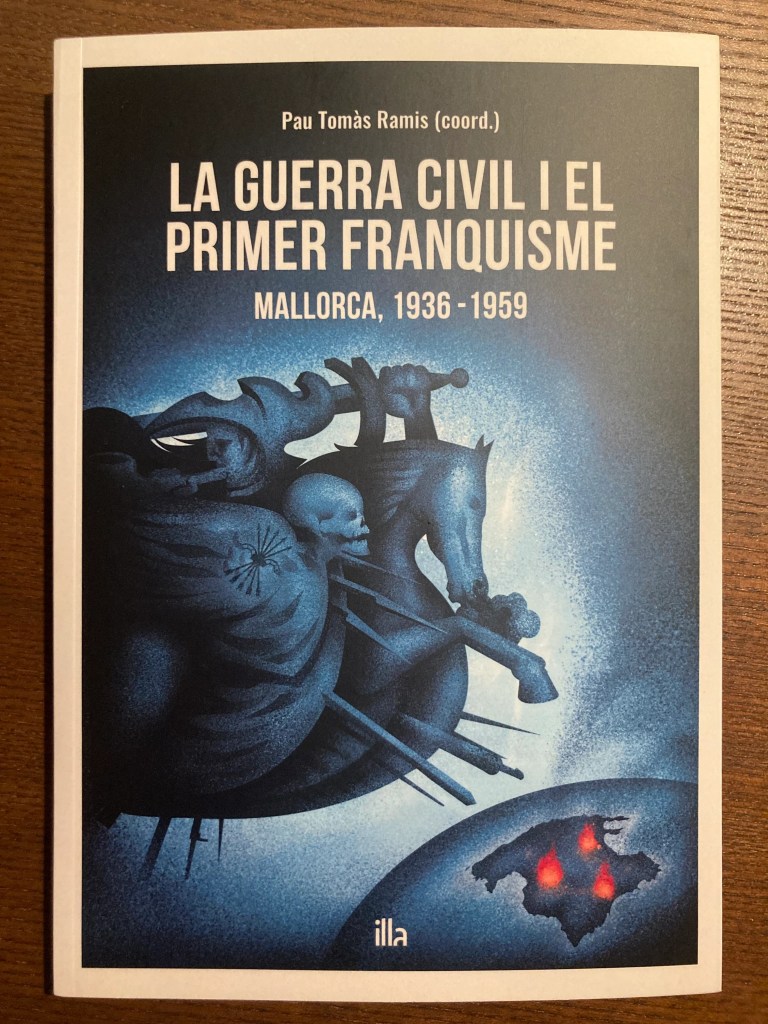
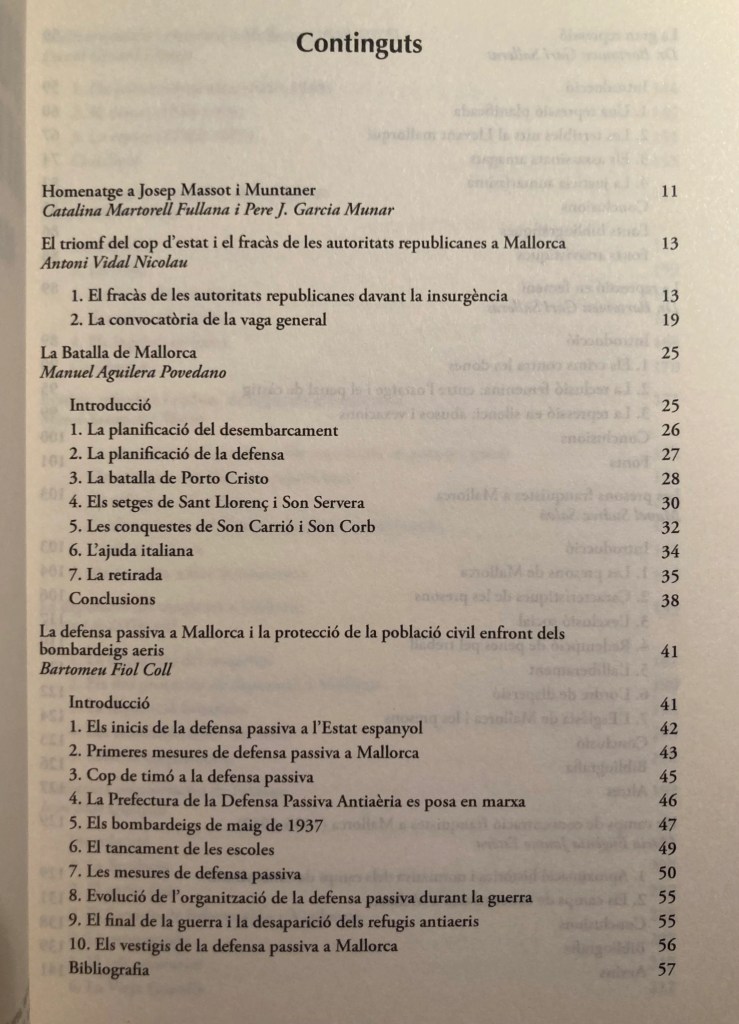
AGUILERA POVEDANO, Manuel, «La Batalla de Mallorca». En TOMÀS RAMIS, Pau (coord.), La Guerra Civil y el primer Franquisme. Mallorca, 1936-1959, Illa, Palma, 2023, pàgs. 25-38.
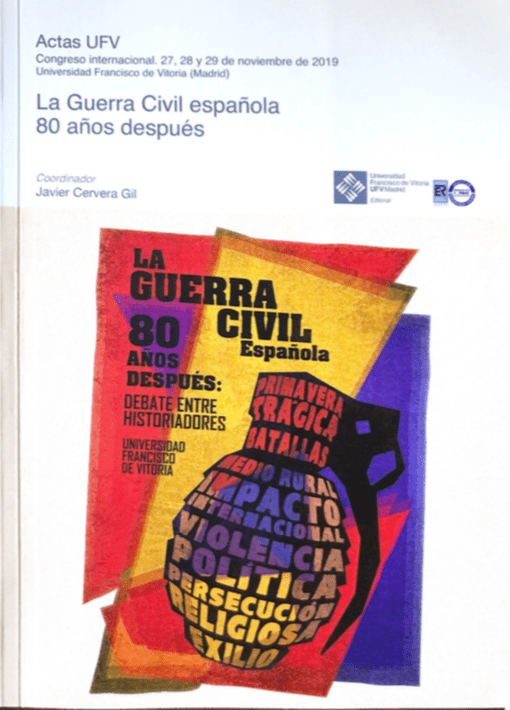
El llibre d’actes del Congreso Internacional de la Guerra Civil Española, 80 años después, celebrat a la Universidad Francisco de Vitoria (Madrid) en novembre de 2019, recull el nostre capítol sobre els resultats del projecte i els combats de Son Carrió entre el 17 i 26 d’agost de 1936. Es pot consultar aquí en PDF.
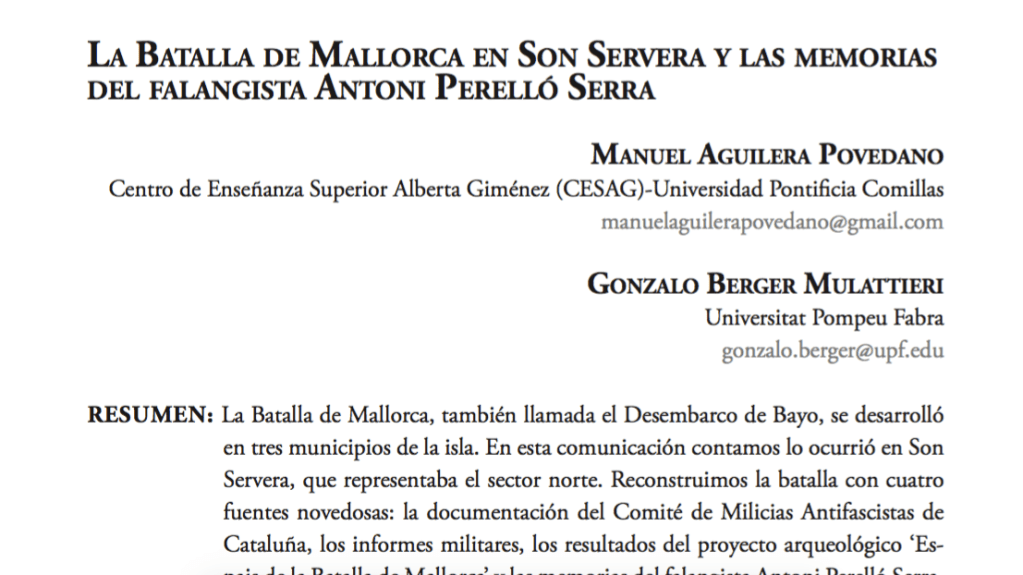
AGUILERA POVEDANO, Manuel, BERGER MULATTIERI, Gonzalo, “La Batalla de Mallorca en Son Servera y las memorias del falangista Antoni Perelló Serra”. Aportes, nº 102, año XXXV (1/2020), pp. 31-49.
Resum La Batalla de Mallorca, també anomenada el Desembarcament de Bayo, es va desenvolupar en tres municipis de l’illa. En aquest article comptem l’ocorregut a Son Servera, que representava el sector nord. Reconstruïm la batalla amb quatre fonts noves: la documentació del Comitè de Milícies Antifeixistes de Catalunya, els informes militars, els resultats del projecte arqueològic ‘Espais de la Batalla de Mallorca’ i les memòries del falangista Antoni Perelló Serra. El combat per Son Servera va tenir una alta intensitat de foc i un exemple va ser la conquesta del Puig de Sa Font, muntanya on Antoni Perelló va passar 14 dies ferit i amagat en una cova envoltat d’enemics. Fins a dues ocasions els antifeixistes podrien haver conquistat el poble, el 18 i el 27 d’agost de 1936, però els sollevats van resistir.
Resumen La Batalla de Mallorca, también llamada el Desembarco de Bayo, se desarrolló en tres municipios de la isla. En este artículo contamos lo ocurrido en Son Servera, que representaba el sector norte. Reconstruimos la batalla con cuatro fuentes novedosas: la documentación del Comité de Milicias Antifascistas de Cataluña, los informes militares, los resultados del proyecto arqueológico ‘Espais de la Batalla de Mallorca’ y las memorias del falangista Antoni Perelló Serra. El combate por Son Servera tuvo una alta intensidad de fuego y un ejemplo fue la conquista del Puig de Sa Font, montaña donde Antoni Perelló pasó 14 días herido y escondido en una cueva rodeado de enemigos. Hasta en dos ocasiones los antifascistas podrían haber conquistado el pueblo, el 18 y el 27 de agosto de 1936, pero los sublevados resistieron.
Abstract The Battle of Mallorca, also called the Landing of Bayo, took place in three municipalities on the island. In this article we tell what happened in Son Servera, which represented the northern sector. We reconstruct the battle with four new sources: the documentation of the Committee of Anti-Fascist Militias of Catalonia, the military reports, the results of the archaeological project ‘Espais de la Batalla de Mallorca’ and the memories of the Falangist Antoni Perelló Serra. The combat for Son Servera had a high intensity of fire and an example was the conquest of Puig de Sa Font, the mountain where Antoni Perelló spent 14 days wounded and hidden in a cave surrounded by enemies. In two times the anti-fascists could have conquered the town, on 18th and 27th August 1936, but the rebels resisted.


 La Batalla de Mallorca