Nou article: «Unearthing the Battle of Mallorca: An Archaeological Perspective on the Spanish Civil War»

La revista científica International Journal of Historical Archaeology ha publicat en el seu número 28 un article amb les conclusions del nostre projecte.

Per a citar-ho:

Linares-Figueruelo, A., Berger Mulattieri, G. “Unearthing the Battle of Mallorca: An Archaeological Perspective on the Spanish Civil War”. International Journal of Historical Archaeology, 28, 1183–1209 (2024). https://doi.org/10.1007/s10761-024-00749-3

Abstract: This article presents a detailed archaeological analysis of the Battle of Mallorca, an impactful yet understudied aspect of the Spanish Civil War, framed within the “Espais de la Batalla de Mallorca (2017–2022)” project. Conducted in the summer of 2019, the excavation at Son Carrió focused on a key area to understand the dynamics and consequences of this significant early military defeat for the Spanish Republic. Through the integration of archaeological data, historical documentation, and ethnography, the study employs a multifaceted approach that enriches our understanding of both the military strategies employed and the everyday realities faced by individuals during the conflict. The research highlights how the combination of landscape archaeology, memory studies, and heritage studies can provide profound insights into the way battles shape physical and cultural landscapes. These theoretical frameworks help articulate how material remnants and spatial configurations from the battle contribute to ongoing cultural memory and heritage preservation efforts. By examining the material culture and defensive structures discovered at Son Carrió, the study offers new perspectives on the combatants’ experiences and the broader sociopolitical implications of the war. This comprehensive examination not only deepens the historiography of the Spanish Civil War but also advocates for the integration of diverse theoretical perspectives in reconstructing historical events. The findings demonstrate the value of archaeological studies in revealing nuanced narratives that contribute to a more comprehensive understanding of past conflicts, emphasizing the role of archaeology in bridging the gap between historical events and contemporary collective memory.
Nou capítol sobre La Batalla de Mallorca

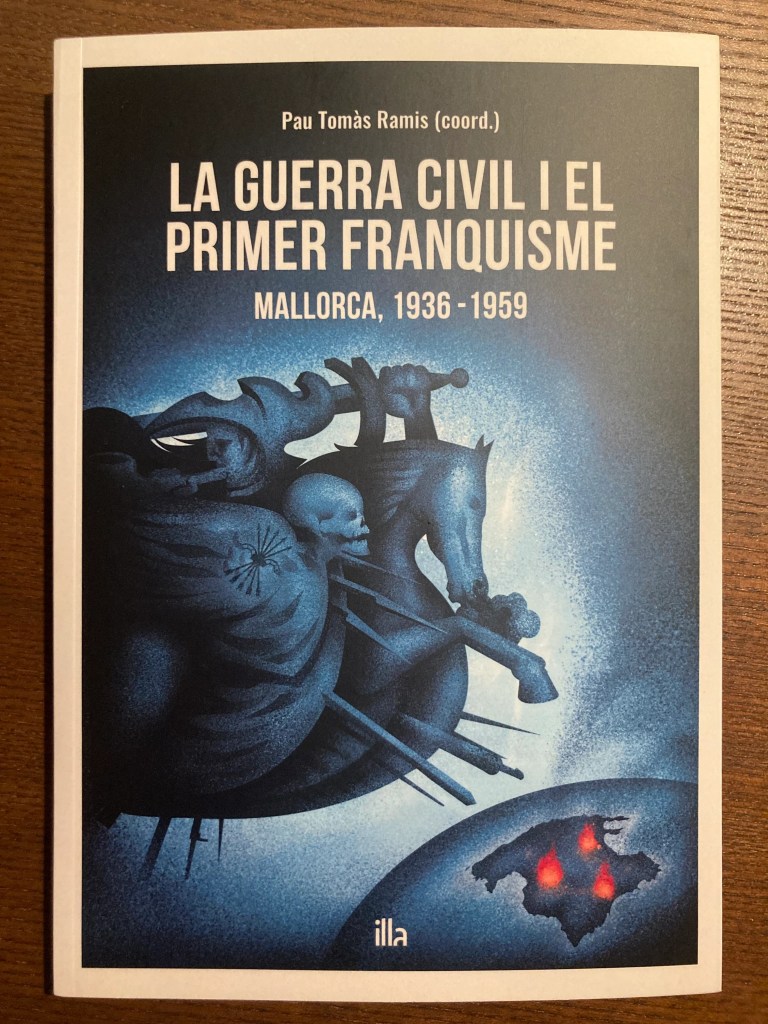
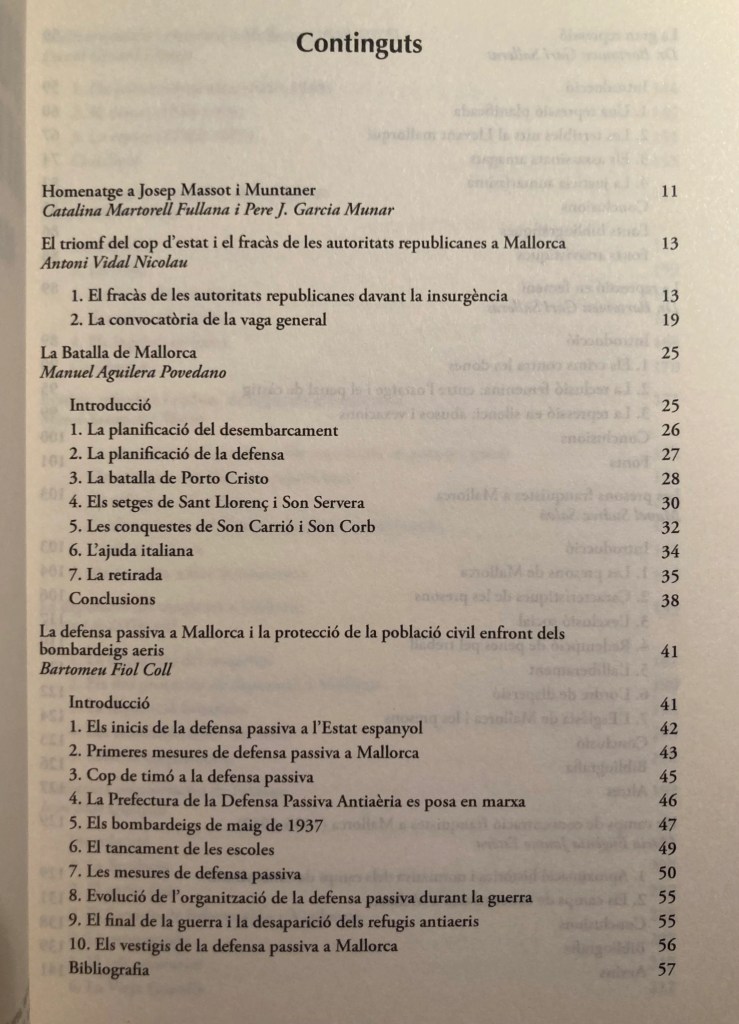
El llibre La Guerra Civil y el primer Franquisme. Mallorca, 1936-1959 (Illa Edicions, 2023), coordinat per Pau Tomàs Ramis, conté un capítol sobre «La Batalla de Mallorca» escrit pel codirector del projecte Manuel Aguilera Povedano.

Per citar:

AGUILERA POVEDANO, Manuel, «La Batalla de Mallorca». En TOMÀS RAMIS, Pau (coord.), La Guerra Civil y el primer Franquisme. Mallorca, 1936-1959, Illa, Palma, 2023, pàgs. 25-38.

Ponencia ‘Arqueologia del conflicte’

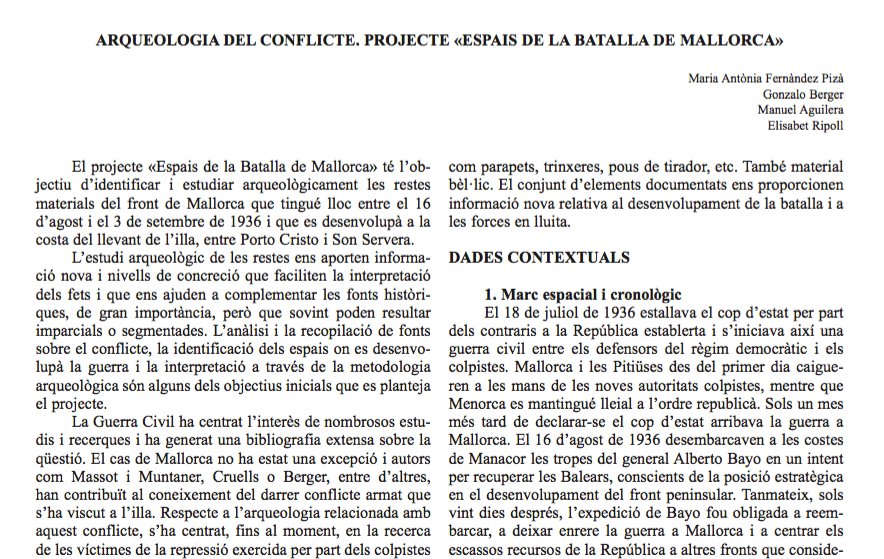
La ponència titulada ‘Arqueologia del conflicte. Projecte Espais de la Batalla de Mallorca‘ acaba de ser publicada en el llibre de les actes de les VIII Jornades d’Arqueologia dels Illes Balears celebrades a Alcúdia el 11-13 d’octubre de 2018. Els autors som Maria Antònia Fernández Pizà, Gonzalo Berger, Manuel Aguilera i Elisabeth Ripoll. L’editora és el Departament de Cultura, Patrimoni i Esports del Consell de Mallorca.

Es tracta d’un estudi preliminar, amb les conclusions de les primeres dues campanyes arqueològiques (2017 i 2018) sobre les restes de la Batalla de Mallorca a Son Servera i Sant Llorenç. Es pot descarregar el PDF aquí.

Per citar:

FERNÁNDEZ PIZÁ, Maria Antònia, BERGER MULATTIERI, Gonzalo, AGUILERA POVEDANO, Manuel, RIPOLL GIL, Elisabeth, ‘Arqueologia del conflicte. Projecte Espais de la Batalla de Mallorca‘. Actes de les VIII Jornades d’Arqueologia de les Illes Balears. Alcúdia, 11-13 d’octubre de 2018, pp. 405-410.

From Florida to research the Bayo landing in Mallorca

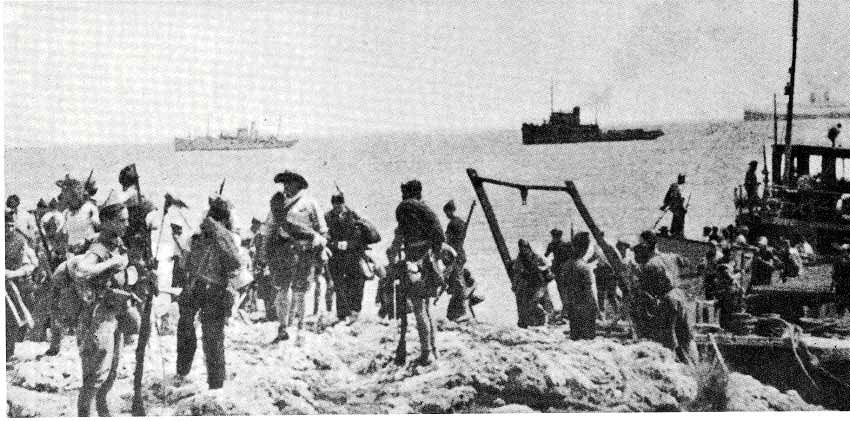
I came to be a part of this project, as most things happen in life, completely by accident. As we know from studying the past, however, things always happen for a reason even if the reason is not visible at the time. In 1936, the thing was war. War penetrated almost every part of the world and Mallorca was no exception. On August 16 to September 4 of that year, a  military expedition was carried out where a total of 4,000 antifascist soldiers were ordered to enter and secure the coast of Mallorca via Son Servera and Porto Cristo. This struggle between the fascist regime and the republicans left and undeniable mark on the landscape of Mallorca. Our goal was to find out to what extant it did.

The Bayo landing in Mallorca.

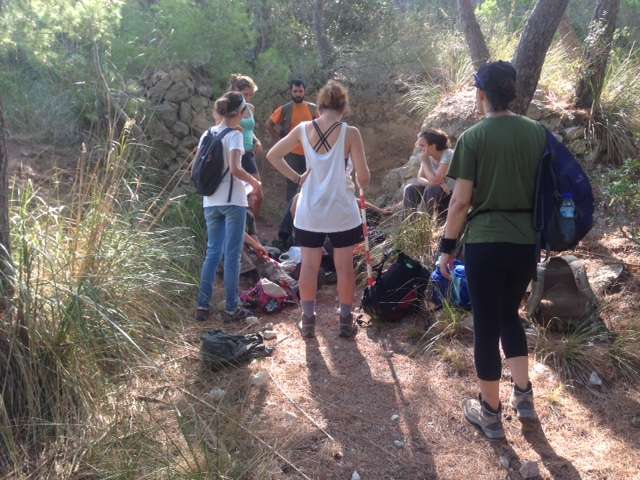
This marks the first year of the investigation team of Espais de La Batalla de Mallorca. Historians, journalists and archaeologists are among us. The daily schedule included hiking and surveying in the morning, after lunch transcribing the forms and formatting photos in the afternoon with lots of discussion!

The first day Team A surveyed Son Corb, a small mountain to the north of Son Servera. Being the first day, the crew was acclimating to the terrain which was full of pine tress, nettles, and scrub brush. This proved difficult to traverse. Nevertheless, the team recorded gunners nests and parapets associated with the civil war. Team B rediscovered the battery of the republican army. Historical documentation shows that the battery contained four cannons when CB were built after the war for future defense.

The second day the team surveyed Puig de Sa Font, next to Na Penyal. We returned the next day to record such features as the trench for the republican troops. Later, we surveyed Coll de Son n’ Escriva, an excellent vantage point of the coast. Here we found many features of the civil war including gunners nests, parapets, trenches along with artifacts such as marbles and caskets.

The fourth day we surveyed Puig de Serisó where we surveyed the roads for signs of activity from the civil war. Documentation of features such as parapets proved difficult due to the the thick vegetation. Later, we returned to Puig de Sa Font.

The fifth day we surveyed Na Penyal where we recorded the barracks and parapets. Some of the team (including myself!) attempted to trace and record the lines of barbed wire strewn all down the mountain. This proved a difficult task as the vegetation was thick in some areas.

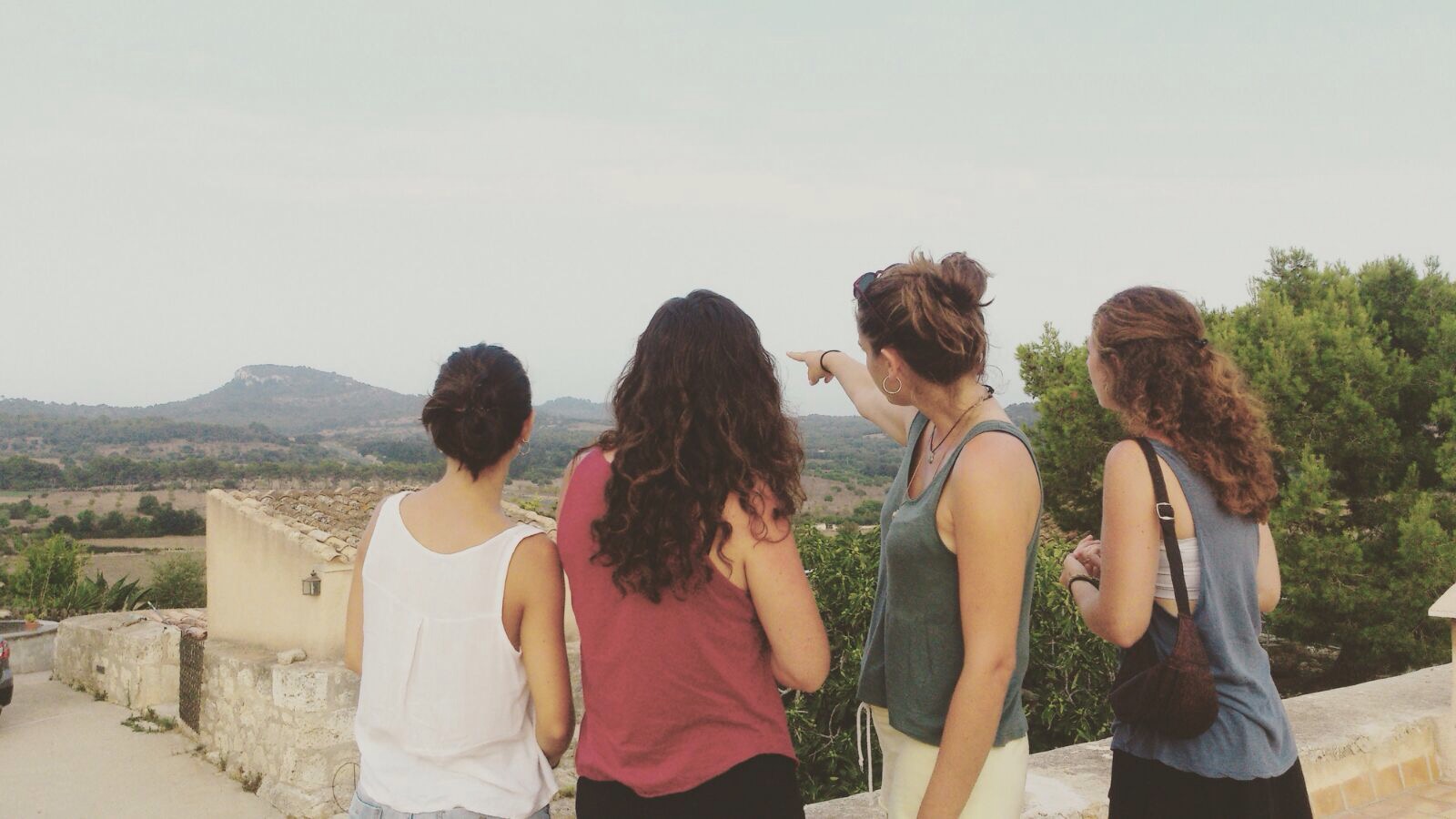
In Son Vives Villa looking the Puig de Sa Font mountain.

The sixth day we surveyed the small mountain next to Na Penyal that has a telecommunications antenna on top. Some artifacts were recovered; however, the terrain showed signs of disturbance from the installation of the antenna and the erosion due to the extreme weather in Mallorca. That evening we were welcomed warmly at Son Vives, an estate with a rich history. There we learned of first encounters with the republican army as retold by the current homeowner  relayed to him by the previous owner. This aspect of oral  history is vital to the project as it compliments the archival and archaeological record. The last day we surveyed the mountain next to the cemetery. Here, we located four natural parapets.

This has proved to be a successful first reconnaissance of the Spanish Civil War in Mallorca. We are looking forward to learning more next year!

Julie Richko Labate

Laia, Elisabeth and Julie, in Son Servera, Mallorca (Spain).